It’s easy to take our words for granted.
I used to tell people I was “Broken”. Meaning that things didn’t work right with me, or I needed to be fixed somehow. And because I said it about myself, I believed it.
The Persian poet Hafiz said, “The words we speak become the house we live in.” When we communicate with others and with ourselves internally, we are constructing an imaginary “house”. Then, we live in this house and experience life inside it. This is how we interpret the world around us and even our own identity.
So, I got to thinking. Do I want “Broken” to be my identity? Or do I want it to be “Healing” or “Growing” or even “Quirky”?
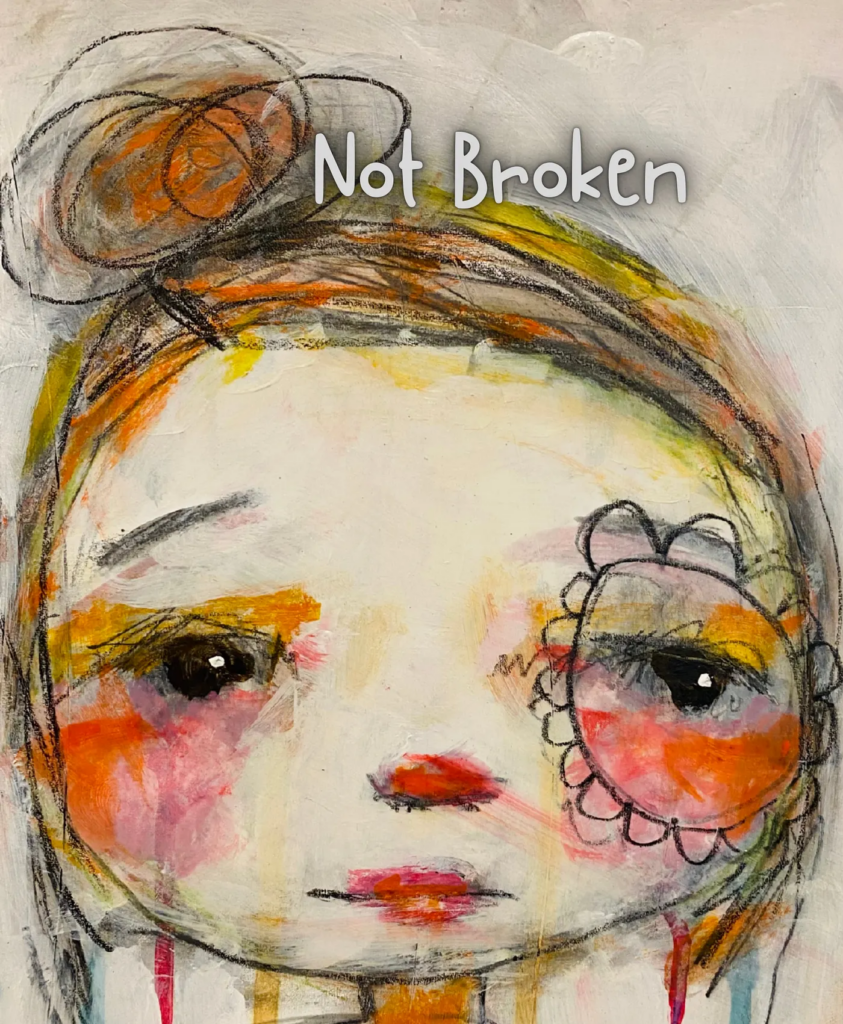
“Not Broken” by Robin Liefeld. Art Poster available on Etsy
What about how we talk to or about others?
I’ve heard it said that your parent’s voice becomes your own inner voice.
This rings true with me from my childhood. I often hear my dad’s voice inside my head. And he’s been gone for over 40 years. It makes me want to be a better inner voice to my children. It makes me want to speak to them knowing that every word I utter lays down a soundtrack for their lives.
Can words actually awaken or even poison something inside of me or the people I talk to? That’s a scary thought.
Do I want a house that is tight, angry, or wounding? The kind that thinks the very worst so the whole household does the same in an effort to protect themselves from the pain of rejection or abandonment?
No way. I want a house that is open and airy and light-filled. The kind where compassion and kindness and love waft through the air. A soft place to land at the end of the day. A place were the members bring their wounded friends for healing and grace.
Summing it up:
If you use a lot of negative self-talk, try changing the words you say to yourself. Kind, not harsh. Forgiving, not mean-spirited.
Choose your words wisely. They don’t just disappear like a vapor into the air when you speak them. They last forever.