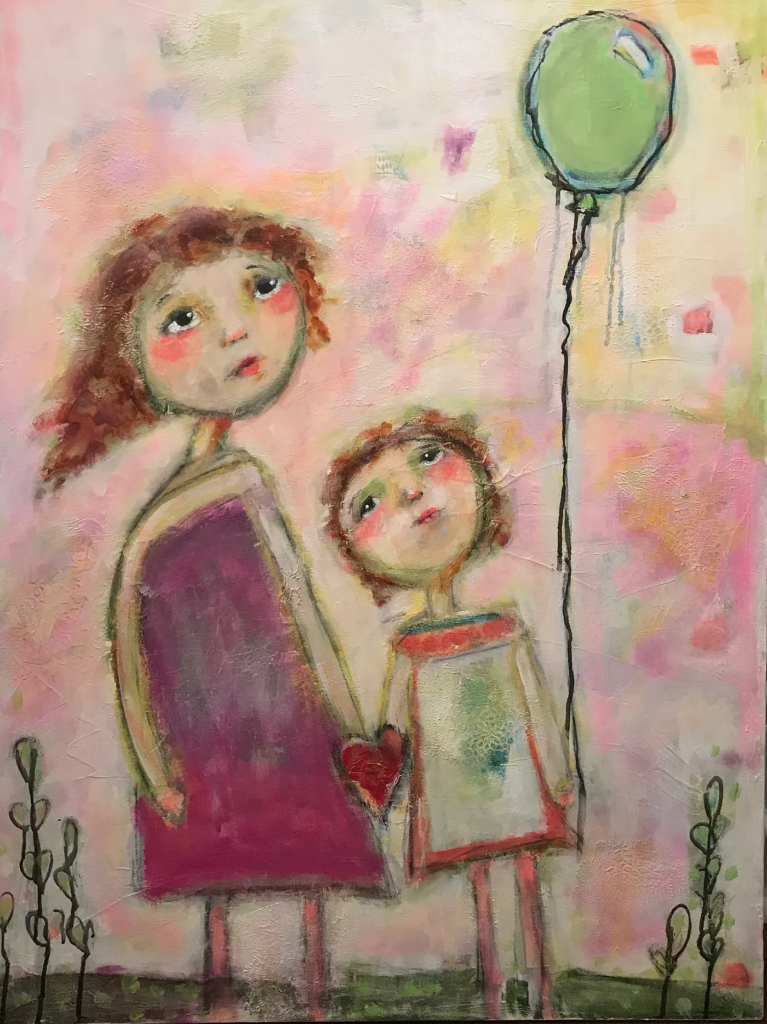
I was a foster mom for 10 years. During that time, my husband and I took in 18 very special children. It was both a privilege and a challenge.
My Childhood Set Me Up
I grew up in a white suburb of Chicago. My childhood was marked by my parent’s bad marriage, my father’s physical and mental health, and my mother’s lack of concern for me. I felt like I didn’t belong and didn’t have a safe place to live. My brothers dealt with their feelings by drinking and smoking pot.
For example: My mom worked days and my dad nights. This meant I was often left alone with my dad during the days. He was an untreated diabetic. This made for many encounters with him that involved confusion and strange behaviors. In his low blood sugar state, he would see things climbing the walls or put toothpaste in his armpits because he thought it was deodorant. Once he even choked me because he thought I was someone else. I would run to the kitchen cabinet, get him some quick-dissolving sugar tablets, unwrap them and push them into his mouth. After a while, my regular dad would return with no memory of what had just happened. My mom was too busy working and trying to hold her marriage together to a difficult man to notice my pain.
This made me feel insecure and scared. It also gave me a huge heart for hurting kids who needed a soft place to land when the adults in their lives were behaving badly.
“All that children need is love, a grown-up to take responsibility for them, and a soft place to land.”
-Deborah Harkness
What Does It Feel Like to Be a Foster Parent?
Well, first of all, it is surreal to have a child dropped off at your house. Usually, they have little or no belongings. I kept clothes for all sizes in the attic for this moment. My home was stocked with toys and baby equipment for whoever would come through the door. Next, is helping the child settle in. They are often confused and disoriented.
Babies are easier because the healing begins right away when you hold them and rock them gently in your arms. They fall asleep in your arms smelling your smells and feeling your softness. One little girl woke up after a couple of hours of me holding her and looked into my eyes with great surprise. “Oh! You are still here?” When you feed them regularly and respond to their cries things start naturally falling into place for them.
Young children have lots of questions. “Who are you?” “Where is my mom?” “Is she okay?” “What should I call you?” They sometimes hide food in their room because they don’t know if there will be more tomorrow. They wet the bed, they have night terrors, they cry a lot. Eventually they will sit on your lap for a cuddle or allow themselves to laugh. You bounce them and say “You are brave!” “You are strong!” “I love you just the way you are!”
Older children arrive feeling 100% responsible for what happened. They are distraught and worried little adults. They blame themselves for not being able to keep the family together and even for being so bad that this happened to them. “I hate you!” “You aren’t my real mother!” “I want my ______ “ (friend, toys from home, old school) they say. You take them to therapists, you give them their meds, you love them though the trauma. And some day you are rewarded with a precious story or memory at bedtime. You stroke their sweaty head and say things like, “I’m so sorry you are going through this”, “You are not responsible for what happened”, “Your parents still love you and you will see them again.” “I’m here for you and you are worthy of so much love.”
“Children born to another woman call me ‘mom.’ The magnitude of that tragedy and the depth of that privilege are not lost on me.” — Jody Landers
How I’ve Changed
Before foster parenting, I felt I understood life and how it works. But I had no idea the extent of pain and suffering some kids go through. Yes, I had childhood wounds from the lack of a loving home and that prepared me to be empathetic.
When grown-ups go off the rails, caring for their children is one of the first things that becomes unhinged. These little people start swaying in the wind of the chaos swirling around them and get battered by it.
I try to put myself in the parent’s shoes. I’ve never been an addict. I’ve never been unemployed or homeless. I never been without a support system or a minority. Judging them is not my job. My job is to give their children a soft place to land.
I see the world differently now. Yes, it can be scary and unsafe. But, I also have witnessed first-hand what happens when someone with an extra bedroom and an open heart becomes a foster parent. Hope and healing is exchanged both ways. I love them through their painful journey in foster care and they inadvertently fill in the love that I missed along the way. I am a safe harbor in the storm for them and they show me how to be resilient in the face of uncertainty. Win win.
“We do not need to know the beginning of a child’s story to change the ending.” — Fi Newood
Press enter or click to view image in full size